Why Ruggedised, Anti-Rodent Fibre Drop Cable Matters in FTTH Deployment
The final connection between the distribution network and the customer can expose fibre cable to some of the most demanding conditions on the route. Overhead spans, façades, ducts and building entry points can all introduce mechanical, environmental and physical risks that need to be considered when specifying fibre drop cable.
Rugged Outdoor / Indoor Construction
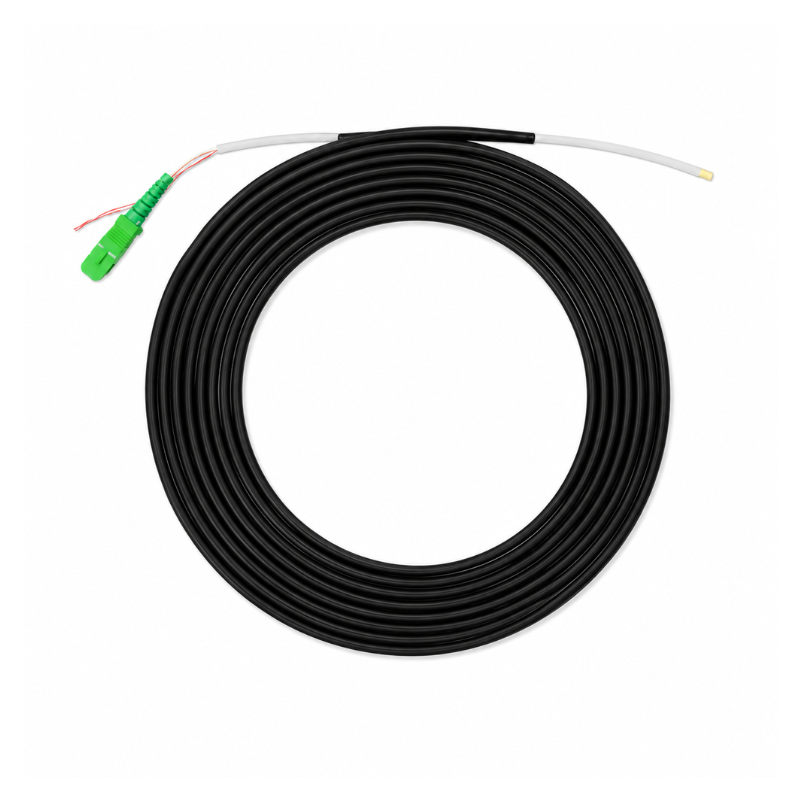
Telenco Dual Sheath Lead-In Cable 1F SM G.657B3 – 5mm/3mm
A robust dual-sheath fibre cable designed to provide outdoor protection while simplifying the transition into the customer premises.
- 1F G.657B3 bend-insensitive fibre
- Robust 5 mm UV-resistant LSZH outer jacket
- 3 mm flame-retardant LSZH inner cable
- Aramid yarn strength member
- Water-blocking tape
- Integrated rip cord
- CPR B2ca inner cable
Ruggedised Outdoor Drop Cable
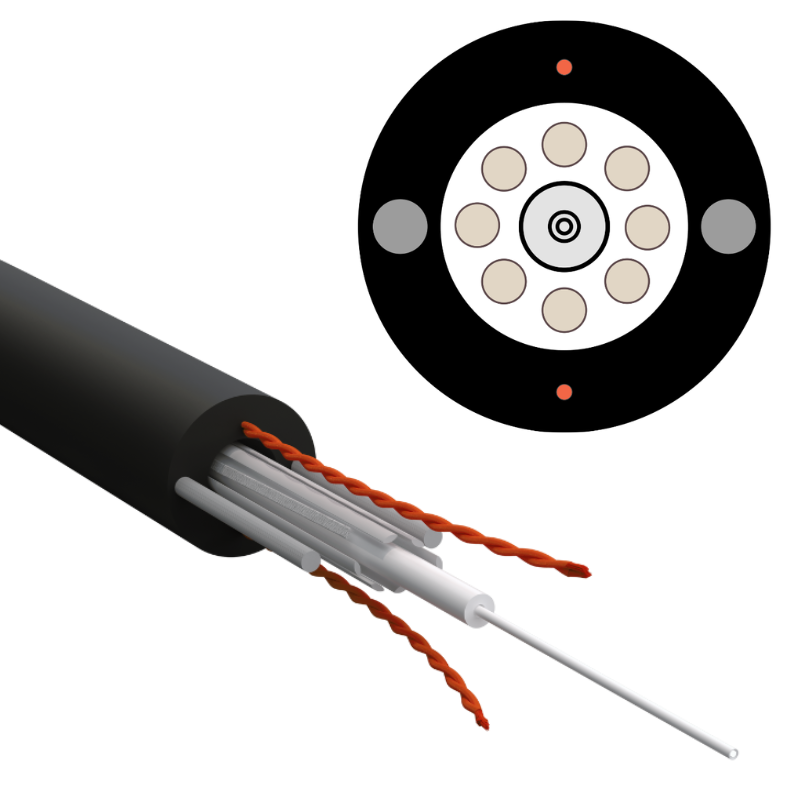
Telenco OH/UG Drop Cable 1F SM G.657A2 – 5mm LX050HDPE
A rugged all-dielectric outdoor drop cable designed to provide high levels of mechanical and environmental protection across exposed FTTH routes.
- 1F G.657A2 single-mode fibre
- 5 mm black HDPE outer sheath
- 2 parallel FRP reinforcement rods
- Swelling cords for watertightness
- 2 reinforced ripcords integrated into the sheath
- UV-resistant all-dielectric construction
- Suitable for façade, duct and overhead deployment
Robust Outdoor / Indoor Drop Cable
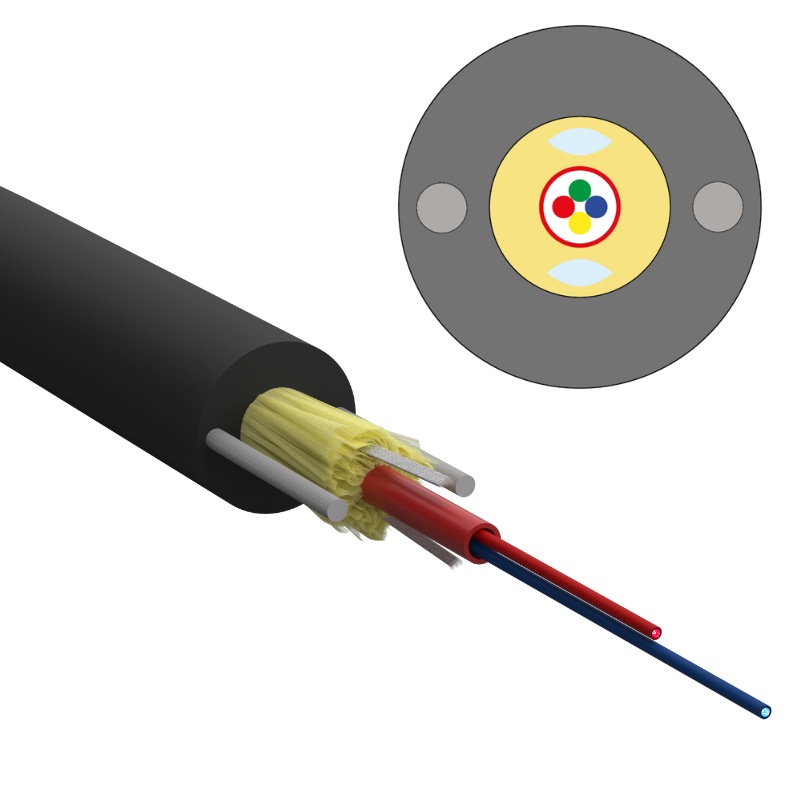
Telenco OH/UG Drop Cable 1F SM G.657A2 – 4mm LM2BK
A compact and robust outdoor/indoor fibre drop cable designed to support multiple FTTH installation methods within a single cable construction.
- G.657A2 single-mode fibre
- Compact 4 mm outer diameter
- Black LSZH outer sheath
- Aramid yarn reinforcement
- 2 FRP reinforcement cores
- Longitudinal sealing with swelling yarn
- UV-resistant all-dielectric construction
- Suitable for aerial, duct, façade and indoor routes
Anti-Rodent Protection Ruggedised construction helps reduce the risk of external damage reaching the optical fibre.
Robust Construction Reinforcement supports demanding installation and outside plant conditions.
Mechanical Performance Cable designs are engineered around tensile, crush, impact and bend performance.
Environmental Protection UV-resistant materials and water-blocking features protect exposed fibre routes.
Network Protection
Why Rodent Resistance Matters in Fibre Networks
Rodents present a practical risk wherever fibre cable is accessible along external network routes. Rats and squirrels can gnaw cable jackets, potentially damaging the protective layers surrounding the optical fibre.
If that damage reaches the fibre itself, a relatively small point of physical damage can create a complete customer service failure. Repair can then require fault location, access to the affected route and replacement or resplicing of the damaged cable.
Specifying a ruggedised drop cable with robust external materials and structural reinforcement therefore helps reduce exposure to this type of physical damage. Anti-rodent protection should be viewed as part of the wider cable and route protection strategy rather than relying on a conventional outer jacket alone.
Mechanical Strength
Why Internal Reinforcement Matters
The outer sheath is only one part of the cable's protection. Reinforcement inside the cable structure plays an important role in how effectively it withstands pulling forces, crushing, impact and other mechanical stresses.
Telenco uses different reinforcing elements according to the cable design. LX050HDPE incorporates two parallel FRP rods, while LM2BK combines aramid yarns with two FRP reinforcement cores.
These structural elements help support the cable mechanically while providing additional material around the optical fibre. This creates a more rugged overall construction and helps reduce the likelihood that external damage progresses directly to the fibre.
A Small Cable Can Carry a Big Network Risk
Fibre drop cable is the final physical link to the customer, so damage at this point can directly affect service availability. As a fibre cable manufacturer, Telenco designs ruggedised drop cable using robust sheath materials, structural reinforcement and environmental protection to help reduce the risk of failure across exposed FTTH routes.
Mechanical Performance
Protection Beyond the Outer Sheath
A cable can look relatively simple from the outside, but its ability to withstand installation and long-term network conditions depends on the complete construction beneath the sheath.
Telenco's LX050HDPE is a good example. The 5 mm HDPE construction includes two parallel FRP rods, reinforced ripcords and swelling cords. Its mechanical specification includes a maximum allowable tension of 400 N, impact resistance of 7 J and crush performance of 2000 N/100 mm.
LM2BK provides a different ruggedised approach within a compact 4 mm cable. Aramid yarns and two FRP cores provide reinforcement, while the LSZH outer sheath and longitudinal sealing support use across a range of indoor and outdoor FTTH routes.
Outside Plant
Protection Across Real-World Fibre Routes
A single customer connection may encounter several environments. Cable can leave the distribution network overhead, continue along a façade, pass through a duct and finally enter the customer premises.
These different environments introduce risks including UV exposure, moisture, pulling forces, bending and physical contact. The cable therefore needs to maintain optical performance while remaining practical to install.
Telenco's LX050HDPE is designed for façade, duct and overhead deployment, while LM2BK supports aerial, duct, façade and indoor FTTH roll-out configurations. Both use ruggedised constructions designed around the practical demands of outside plant deployment.
Environmental Resistance
Why Water Protection Matters Too
Rodents are only one external risk. Water penetration can also compromise fibre cable over time, particularly where drop cable passes through underground ducts or exposed outside plant infrastructure.
This is why water protection is built into selected Telenco cable constructions. LX050HDPE incorporates swelling cords to provide longitudinal watertightness, while LM2BK uses swelling yarn as part of its longitudinal sealing.
The dual-sheath lead-in cable similarly incorporates water-blocking tape beneath its outer jacket. Combining water protection with robust sheath and reinforcement materials helps provide a more complete approach to protecting the customer connection.
Building Entry
Maintaining Protection Through the Outdoor-to-Indoor Transition
The point where fibre enters a building presents another challenge. Outside plant cable requires durability and environmental resistance, while the cable used inside the premises must also meet appropriate indoor fire requirements.
Telenco's dual-sheath lead-in cable addresses this transition with a robust 5 mm UV-resistant LSZH outer jacket surrounding a 3 mm flame-retardant LSZH inner cable.
The outer sheath can be removed using the integrated rip cord, leaving the CPR B2ca inner cable to continue inside the property. Aramid yarn provides tensile strength while water-blocking tape contributes to environmental protection along the external section of the route.
Telenco Cable Expertise
Designed by a Fibre Cable Manufacturer
Drop cable selection benefits from understanding how the cable will interact with the rest of the fibre network. Telenco's role as a manufacturer allows cable construction to be considered alongside the installation method, network hardware and customer connection.
Different Telenco drop cable designs use different combinations of fibre type, sheath material, FRP reinforcement, aramid yarns and water-blocking elements rather than applying one construction to every installation.
This allows network designers and installers to select a robust cable around the actual route, mechanical requirements and environmental risks of the deployment.
Specification
Choosing Drop Cable Around the Risk Profile
Fibre type and diameter are important, but they should not be the only considerations when selecting a drop cable. The complete route and the risks associated with it should influence the specification.
Consider whether the cable will be installed overhead, within duct, along a façade or through several of these environments. Mechanical loading, water exposure, UV exposure, bend requirements and the potential for rodent or other external damage should all form part of the decision.
Selecting an appropriately ruggedised construction can help protect the final fibre connection and reduce the likelihood of avoidable service disruption later in the network lifecycle.
Find the Right Fibre Drop Cable for Your Network
From ruggedised outdoor routes to outdoor-to-indoor customer connections, Telenco UK supplies and manufactures robust fibre drop cable designed around the mechanical and environmental demands of modern FTTH deployment.
Shop Fibre Drop Cable